7 Signs of Hidden Roof Leaks Most Homeowners Miss
A roof leak doesn’t always show up as a dramatic drip from the ceiling. In many cases, water slowly works its way into the home, causing damage long before you notice a stain or puddle. By the time obvious signs appear, the repairs are often more extensive and expensive.
Knowing what to look for can help you catch hidden leaks early, protect your home, and avoid costly surprises. Here are seven common signs of roof leaks that many homeowners overlook.
1. Ceiling Discoloration or Faint Stains


A small, light-brown or yellowish stain on the ceiling may not seem like a big deal, but it’s often the first sign of a slow leak. These stains can appear far from the actual source of the leak because water travels along rafters and drywall before showing itself.
What to watch for:
- Small circular stains
- Faint discoloration that grows over time
- Peeling or bubbling paint
2. Musty Odors in the Attic or Upper Rooms

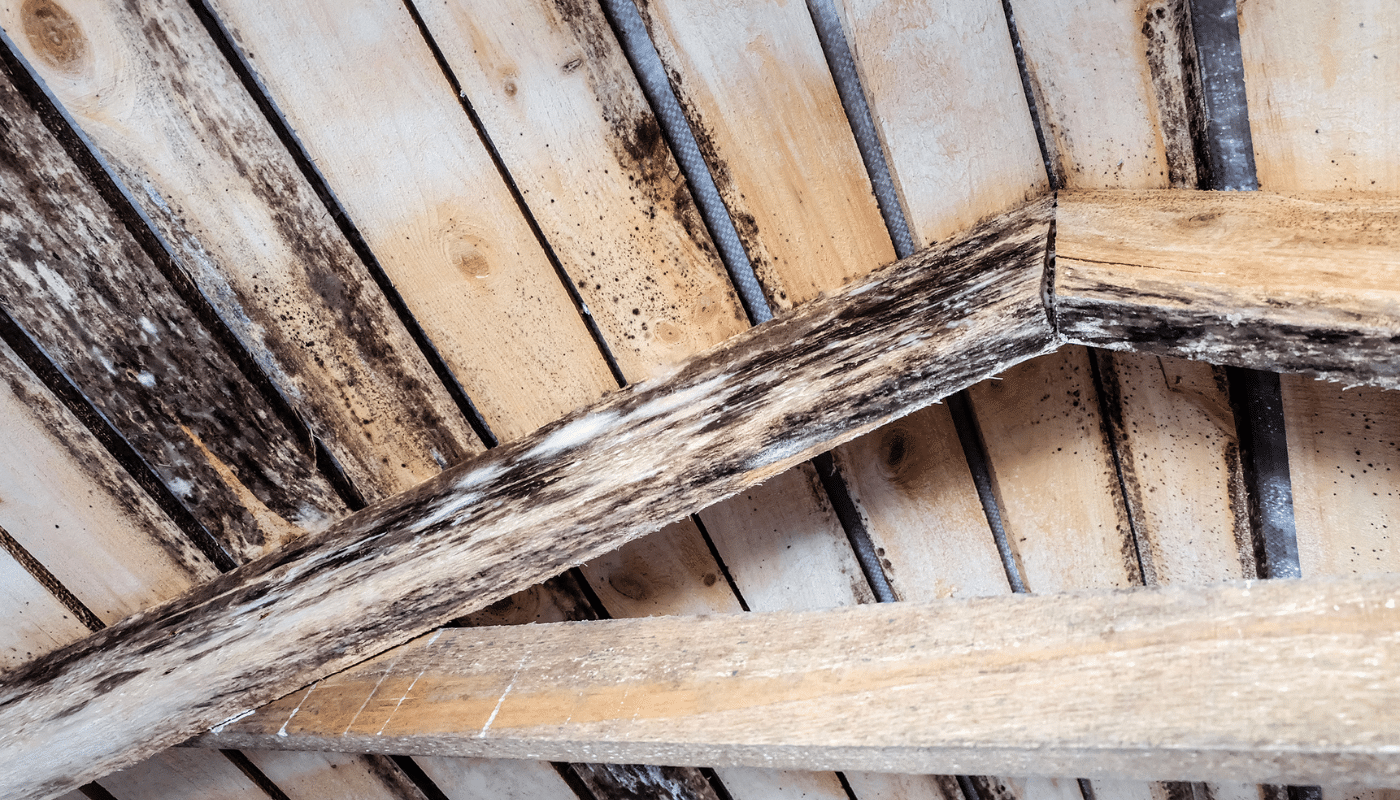
If you notice a persistent musty smell in your attic or upstairs rooms, moisture may be trapped in the insulation or wood. Even without visible water, this odor often signals hidden leaks or poor ventilation.
Why it matters:
- Moisture can lead to mold growth
- Wood framing may begin to rot
- Insulation loses effectiveness
3. Warped or Buckling Shingles


Shingles that are curling, buckling, or lifting may allow water to seep underneath. Even if you don’t see an active leak inside, damaged shingles often lead to hidden moisture issues.
Common causes:
- Aging materials
- Poor attic ventilation
- Previous storm damage
4. Damaged or Rusted Flashing
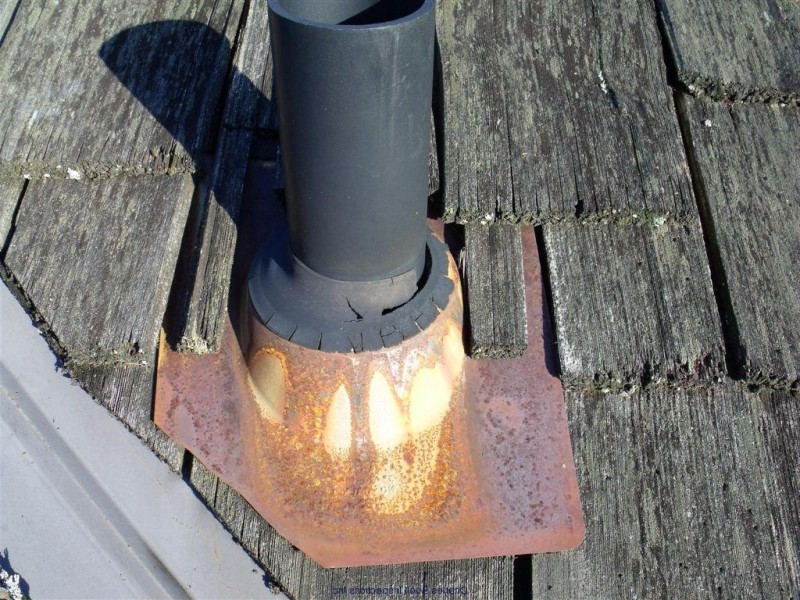
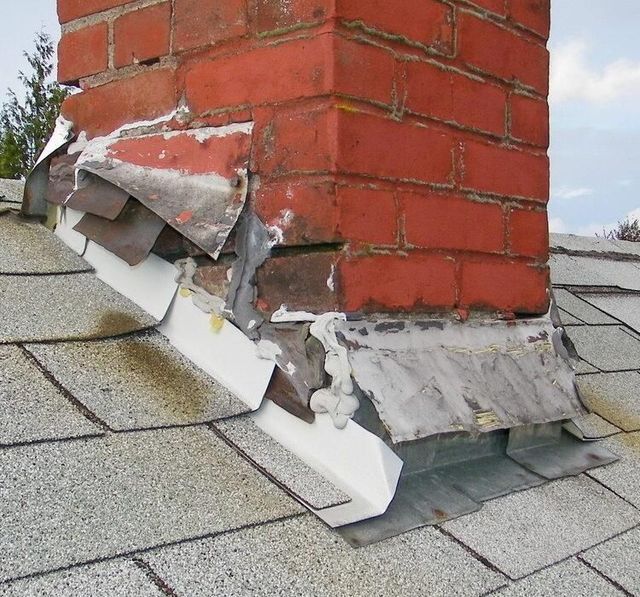
Flashing is the metal material installed around chimneys, vents, skylights, and roof valleys. When it cracks, rusts, or pulls away from the roof, water can slip into areas you can’t easily see.
Check around:
- Chimneys
- Plumbing vents
- Skylights
- Roof-to-wall transitions
5. Granules in the Gutters

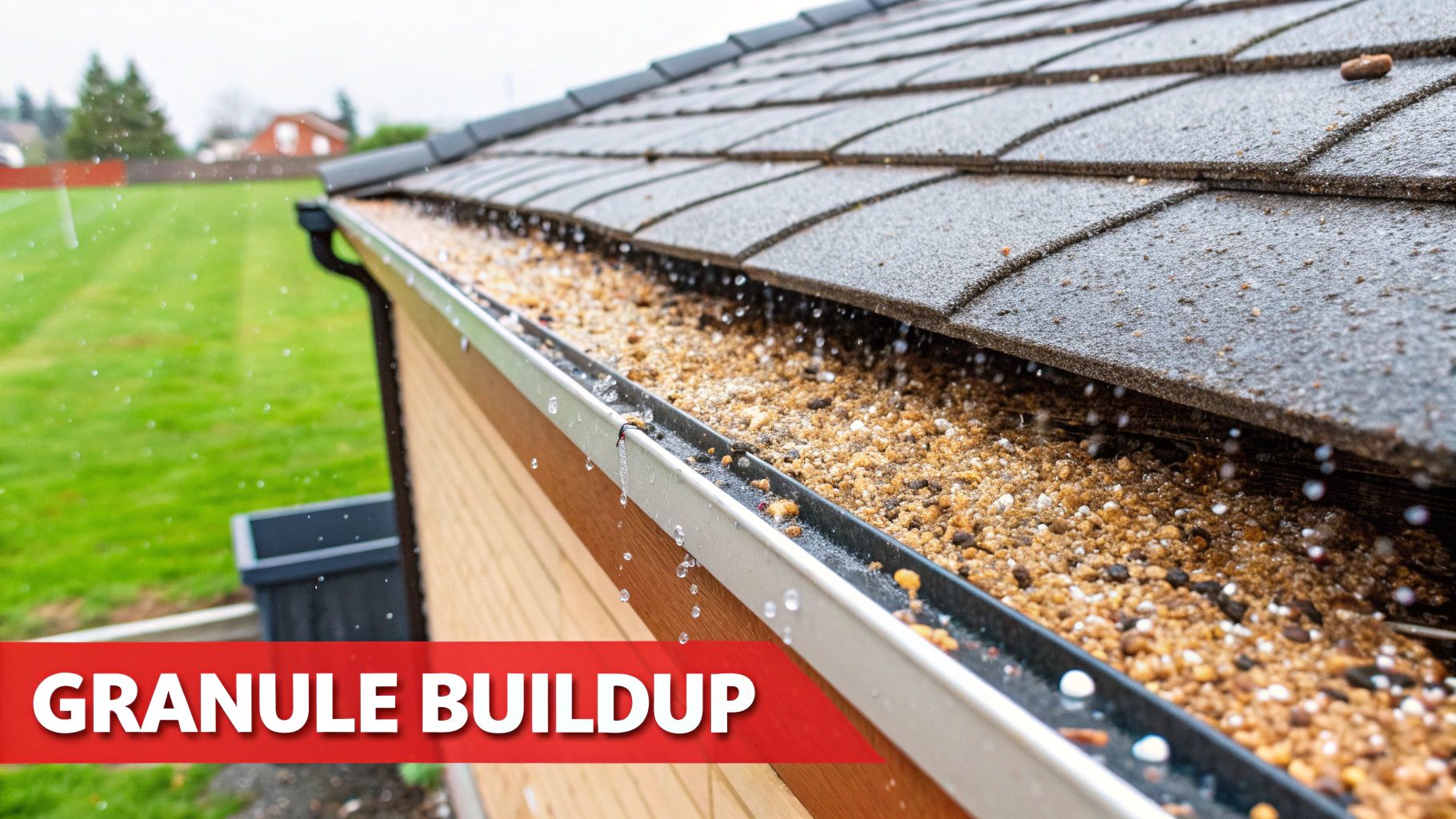
If you notice sand-like particles collecting in your gutters or downspouts, your shingles may be deteriorating. These granules protect the shingle from UV rays and weather. Once they’re gone, the shingle becomes vulnerable to leaks.
What this means:
- The roof may be nearing the end of its life
- Water can penetrate more easily
- Repairs or replacement may be needed soon
6. Peeling Exterior Paint Near the Roofline


Peeling or bubbling paint near the eaves or roofline is often caused by trapped moisture. This can indicate water intrusion behind the siding or fascia, often due to roof or gutter issues.
Possible causes:
- Leaking gutters
- Damaged fascia boards
- Improperly installed flashing
7. Unexplained Increase in Energy Bills
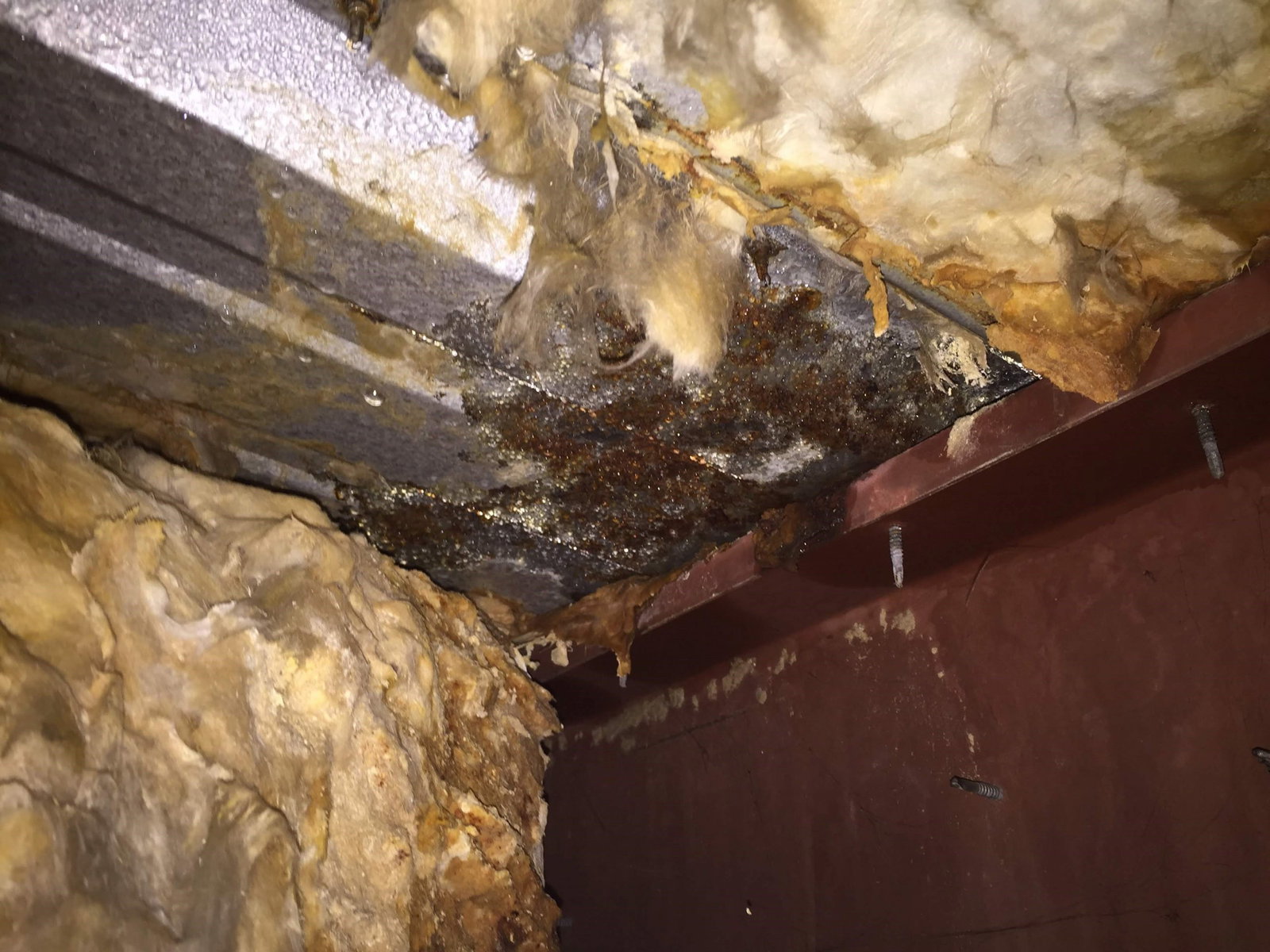

A hidden roof leak can soak your attic insulation, reducing its effectiveness. When insulation loses its ability to regulate temperature, your heating and cooling system has to work harder.
Signs to notice:
- Higher-than-normal utility bills
- Uneven temperatures in the home
- Drafts in upper rooms
Why Early Detection Matters
Hidden roof leaks don’t fix themselves. Over time, even a small leak can cause:
- Mold growth
- Rotting wood
- Damaged insulation
- Structural problems
- Expensive interior repairs
Catching these signs early can save you thousands of dollars and extend the life of your roof.
Schedule a Professional Roof Inspection
If you’ve noticed any of these warning signs, it’s best to have a professional inspection. A trained roofing contractor can identify the true source of the leak and recommend the right solution before the damage spreads.
Regular inspections—especially after storms or as your roof ages—are one of the smartest ways to protect your home.